Proceedings of Steel Decarbonisation Convening
Driving the Green Steel Transition for India
January 21, 2026 | The Claridges, New Delhi
About the Convening
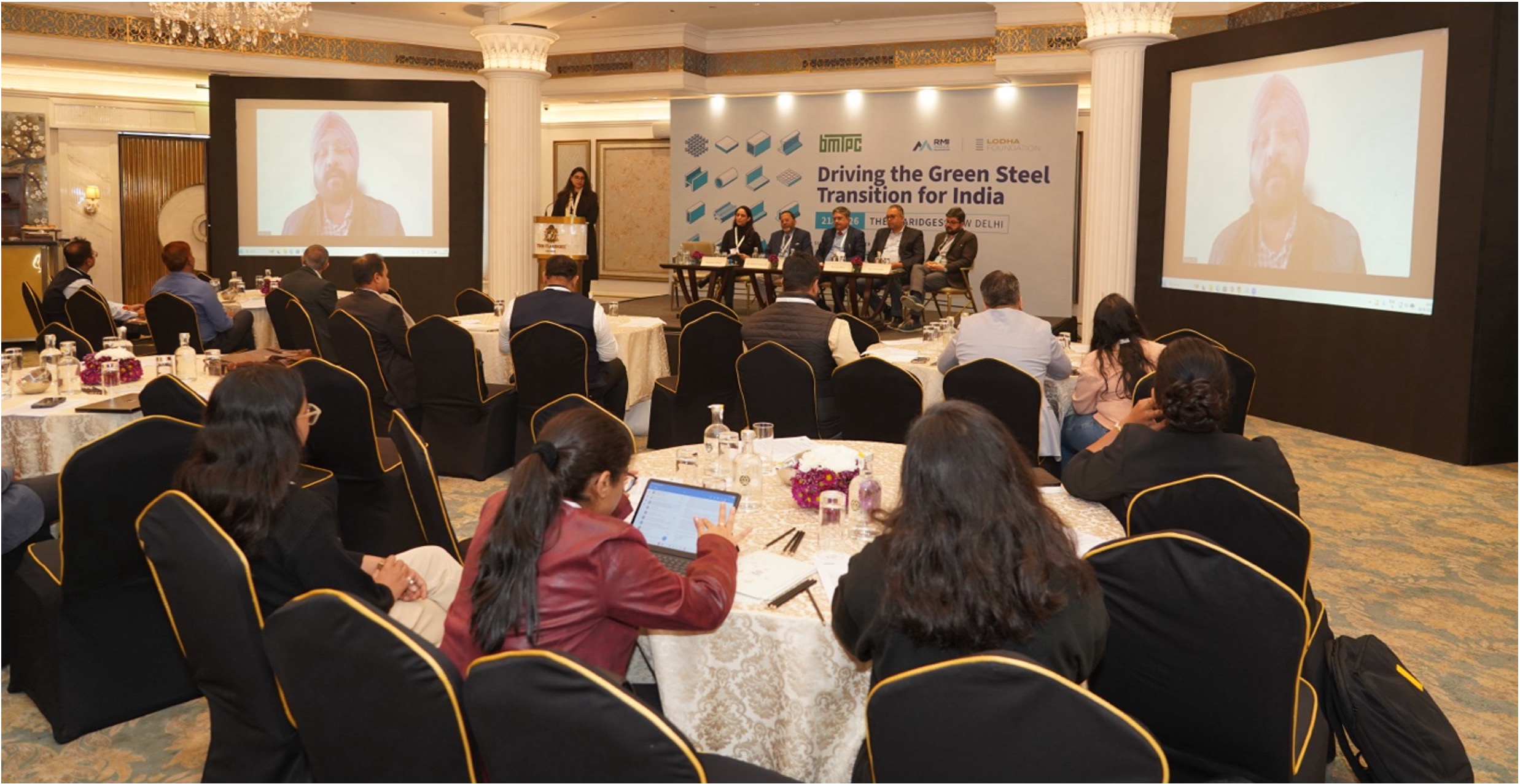
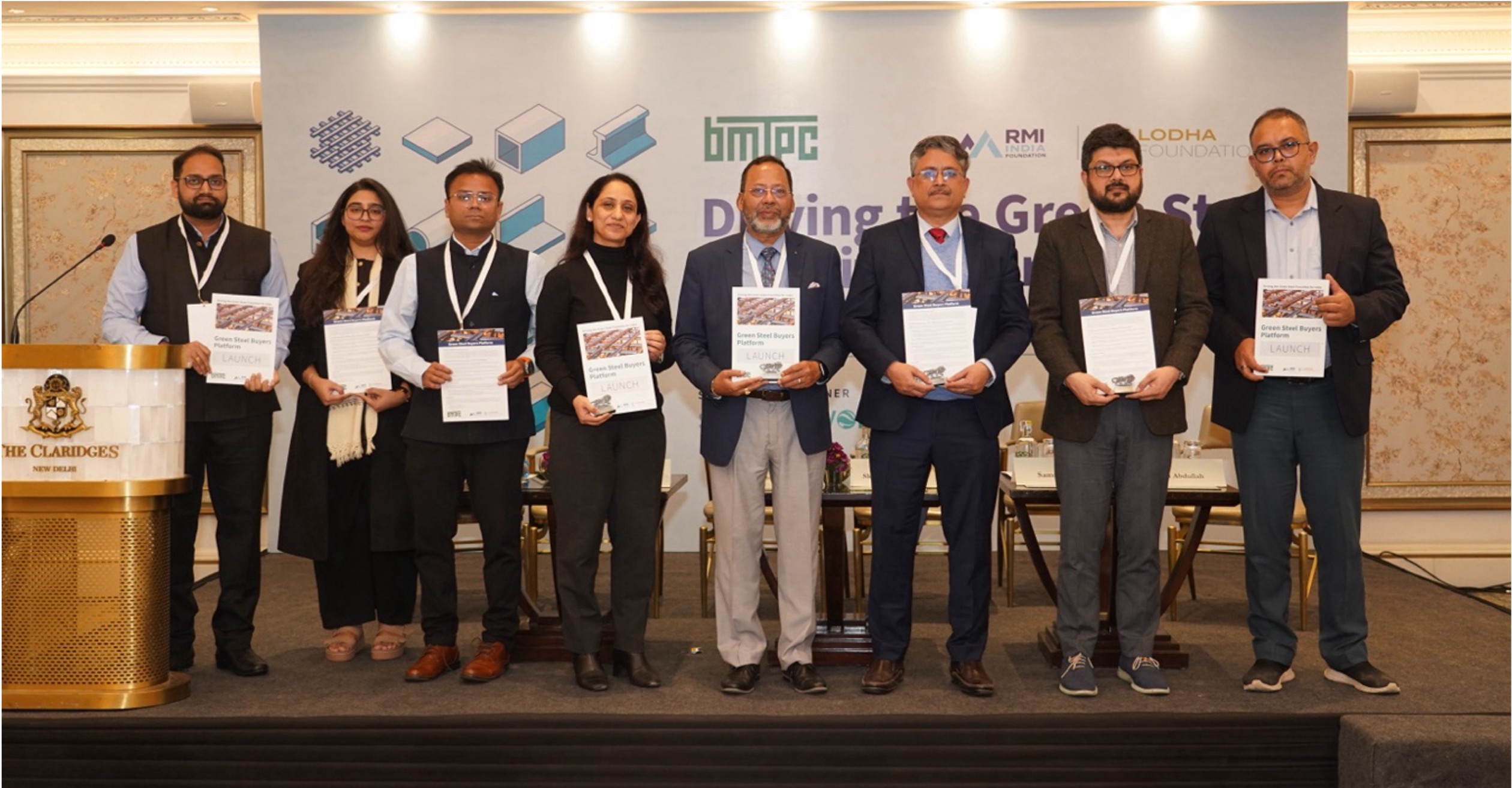
On January 21, 2026, RMI India Foundation, in partnership with the Building Materials and Technology Promotion Council (BMTPC) and the Lodha Foundation, convened senior stakeholders across government, industry, finance and the built environment to advance India’s green steel transition. The steel decarbonisation convening had three key objectives:
- Soft-launch the India Green Steel Buyers Platform (GSBP) as a demand-aggregation and market-enabling mechanism to accelerate green steel adoption in India.
- Position steel used in the built environment as a priority decarbonisation lever, given its scale of consumption, near-term emissions reduction potential, and alignment with India’s Green Steel Taxonomy.
- Assess market and policy readiness for scaling green steel by convening policymakers, producers, financial institutions, and large buyers to identify practical implementation pathways.
The India Green Steel Buyers Platform aims to coordinate market actors to operationalise demand aggregation and build the institutional infrastructure that aligns buyers, producers, and financiers to address demand uncertainty and enable scale.
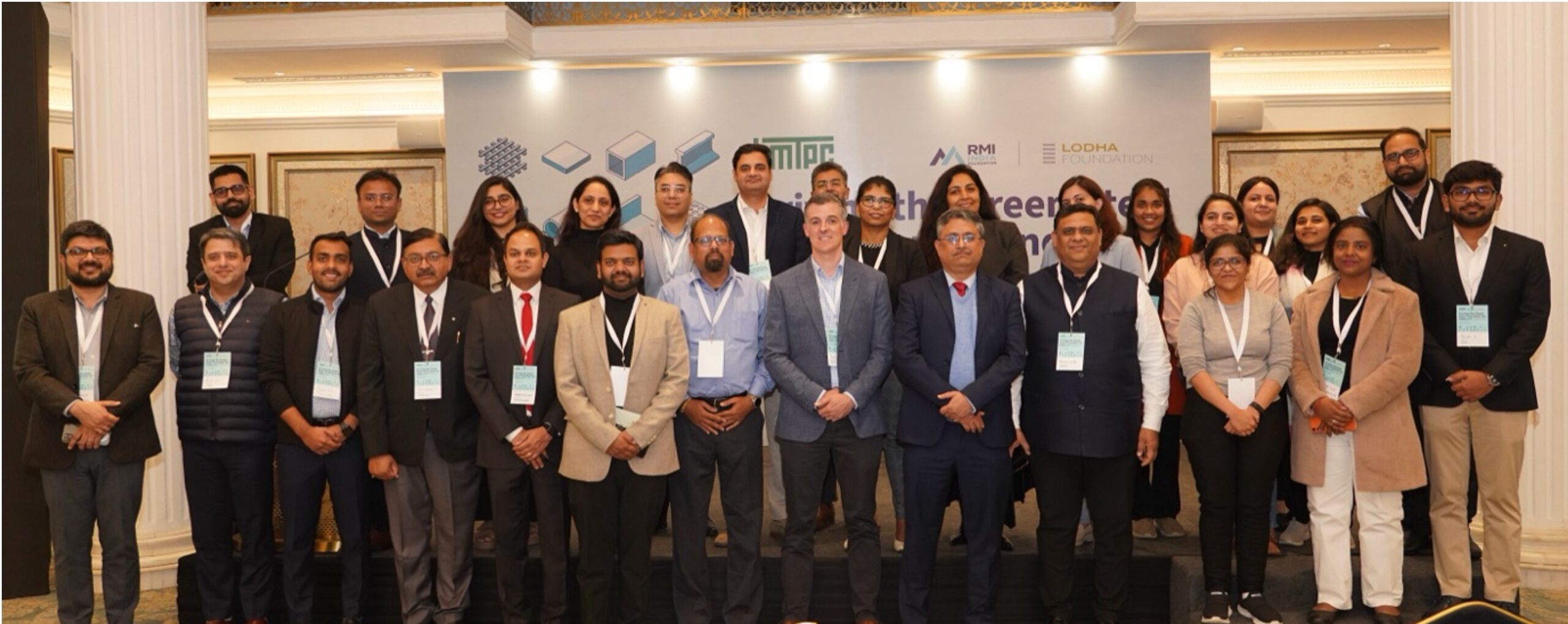
Participant Profile: The convening brought together private-sector developers, central government agencies, steel producers, recyclers, technology providers, financial institutions, and think tanks, enabling cross-sector dialogue on accelerating India’s green steel transition.
Context: Built Environment’s strategic role in India’s Steel Decarbonisation
India’s steel sector contributes about two percent of GDP and accounts for nearly 12 percent of national greenhouse gas emissions. As the world’s second-largest producer of crude steel and the largest producer of sponge iron, India faces a defining challenge: reducing sectoral emissions, as production capacity and per capita consumption are expected to nearly double by 2030 to meet the country’s growing infrastructure and development needs.
The built environment dominates steel demand. The construction sector accounted for nearly 68 percent of steel consumption in FY24 and is projected to remain around 60 percent through FY31, driven by rapid urbanisation and large-scale infrastructure development. Reinforced cement concrete construction predominates, making rebar and structural steel critical levers. In FY24, bars and rods represented 42 percent (~59 MT) of finished steel consumption — the single largest product category. This demand concentration positions the built environment, particularly rebar, as the most influential lever for near-term emissions reduction. The scale and standardisation of construction-grade steel create unique opportunities for faster market intervention relative to other end uses.
Inaugural Session
Akshima Ghate (Director, RMI India Foundation) positioned steel decarbonisation as integral to India’s growth and urbanisation in her opening remarks, noting that production capacity is expected to double and per capita consumption is projected to approach 160 kg to meet growing infrastructure and development needs. Drawing on RMI’s analytical work on steel decarbonisation and engagement across the steel value chain, she highlighted a fundamental challenge in driving the adoption of green steel in the built environment: producers hesitate to invest without assured demand, while buyers hold back in the absence of an affordable, reliable supply. This deadlock can be broken through credible, coordinated demand signals that reduce risk and unlock scale. Building on RMI’s global experience with buyer alliances across steel, concrete, aviation fuel, and maritime transport, she announced the soft-launch of a first-of-its-kind Green Steel Buyers Platform tailored to Indian market realities, moving decisively from intent to execution, and invited stakeholders to co-create its design.
Parmjeet Singh (Director, National Institute of Secondary Steel Technology (NISST)) acknowledged the progress India’s steel sector has made since 2005 in reducing emissions, while emphasising that meeting emerging green steel expectations will require sustained action. As the Ministry of Steel’s designated nodal agency, he outlined NISST’s role in supporting this transition through training and efficiency-led interventions, anchored in the Green Steel Certification framework notified in December 2024. The framework defines green steel by emissions intensity per ton of finished steel rather than per ton of crude steel, aligning measurement with end-use realities. Since August 2025, he noted, over 62 green steel certificates have been issued and more than 115 units registered, indicating growing industry uptake. Covering Scope 1, Scope 2, and select Scope 3 emissions, including embedded carbon in inputs, the framework is complemented by ongoing engagement with manufacturers to drive further reductions through process efficiency, energy optimisation, and material choices. He welcomed RMI’s demand-side initiative and underscored the role of user industries in accelerating the transition through procurement.
Sanjay Kumar (Chief General Manager, SAIL) characterised steel as a “priority-to-abate” sector, given the long-term emissions lock-in associated with buildings and infrastructure that persist for decades. Reflecting on SAIL’s technological evolution across successive phases, he outlined that SAIL has adopted efficient processes benchmarked against global best practices. He highlighted India’s advantage in iron ore availability alongside its dependence on imported coking coal — a major source of emissions — which presents both a constraint and an opportunity to reduce carbon intensity through beneficiation, lower coke rates, renewable power integration, and incremental operational improvements. While these measures rarely make headlines, taken together, they have delivered significant emissions reductions without materially affecting steel prices, even as capacity expands. In parallel, leading producers are already advancing near-term emissions reductions through greater scrap utilisation, the integration of renewable electricity into EAF routes, and the efficiency-led modernisation of plants. He noted that deeper decarbonisation will ultimately require hydrogen blending, biochar use, carbon capture, and alternative ironmaking pathways — each currently limited by cost and feedstock availability. He cautioned, however, that the transition presents a structural cost challenge that neither producers nor buyers can absorb alone. Shared responsibility, underpinned by predictable demand, is therefore essential. He asserted that platforms enabling coordinated buyer-supplier action are critical to building trust, predictability, and scale.
Dr Shailesh Agrawal (Former Executive Director, BMTPC) contextualised green steel within the sheer scale of India’s construction and housing pipeline. With 40 million homes delivered under Pradhan Mantri Awas Yojana (PMAY) and a further 30 million planned under PMAY 2.0, he noted that urban housing alone is projected to consume nearly 18 million tons of steel. Framing this within the vision of Viksit Bharat and reduced dependence on fossil fuels, he underscored that steel will remain an indispensable building material, making its decarbonisation imperative rather than optional. He highlighted BMTPC’s role in bridging the gap from “lab to land”. He cited initiatives such as the Global Housing Technology Challenge (GHTC) and Lighthouse Projects (LHP) while noting that innovation remains difficult to mainstream due to persistent gaps between research and practice, despite enabling mechanisms such as life-cycle costing under the General Financial Rules (GFR), capacity building, and standardisation through CPWD specifications. Addressing misconceptions, he clarified that Bureau of Indian Standards (BIS) standards already permit the use of green steel based on performance compliance. He emphasised that technologies succeed only when aligned with ground realities and called for collective action to move from pilots to mainstream adoption through producer–buyer coordination.
Aun Abdullah (Program Director, Sustainable Urbanisation, Lodha Foundation) framed India’s current phase of rapid urbanisation as a historic inflexion point, drawing parallels with the Green Revolution, which secured food production but created lasting environmental externalities through the pathways chosen. Urbanisation, he argued, will propel India toward a higher-income economy, but today’s material and design choices will determine whether economic growth becomes an enabler or a constraint for environmental goals. With steel demand from housing and infrastructure set to rise sharply, he cautioned that solutions must extend beyond incremental cost pass-throughs to address design efficiency, material optimisation, and system-level emissions. From the perspective of large real estate developers, he noted that willingness to adopt green steel exists, but is tempered by inconsistent supply, geographic constraints, and price uncertainty. He emphasised that a buyer aggregation platform could play a catalytic role by consolidating demand, improving supply reliability, and providing the clarity needed to enable scale.
Samrat Ray (Senior Energy Officer, Asian Development Bank (ADB) outlined the bank’s engagement with India’s steel decarbonisation agenda and identified the absence of clear demand signals as the principal barrier to financing. He referred to consultations around the green steel taxonomy released in 2024 and its associated procurement framework, emphasising the importance of financing and contracting structures that are not only credible but also operational and implementable. He shared from global experiences that early markets are often mandate-driven, a reality reflected in ADB’s shift to Quality- and Cost-Based Selection (QCBS) procurement from January 2026, which will embed sustainable procurement requirements across large infrastructure projects. He acknowledged that QCBS may entail cost increases, the scale of which remains uncertain, with some estimates suggesting a potential impact of 5%–10%. At the same time, he highlighted unresolved challenges around emissions measurement, inconsistencies across green steel taxonomies, and international guidelines, particularly in definitions based on crude versus finished steel. He cautioned that much of today’s certified green steel reflects efficiency gains under existing systems rather than new investments, arguing that a credible market will ultimately require differentiated pricing and long-term offtake certainty. Based on voluntary corporate commitments, he estimated potential demand of around 10 million tons by 2030, rising to 20 million tons by 2035, and stressed the importance of aligning near-term capacity expansion with long-term decarbonisation pathways, given the long asset lifetimes of steel plants.
Overall, the inaugural session highlighted steel sector decarbonisation as a central pillar of India’s growth and urbanisation trajectory, underscoring the role of phased production-side transitions alongside demand-side action. Speakers emphasised near- and medium-term pathways such as greater use of scrap-based steelmaking, increased renewable electricity use, and efficiency-led process modernisation, while recognising that deep, long-term emissions reduction will depend on the scale-up of green hydrogen–based production, emerging green iron corridors, and other advanced technologies. At the same time, the session underscored that these production pathways cannot advance in isolation, given the long lifetimes and capital intensity of steel assets. To bridge this gap, speakers highlighted the need for coordinated demand creation through mechanisms such as the India Green Steel Buyers Platform, which can aggregate procurement, provide predictability to producers, and accelerate the adoption of currently available green steel, even as investment continues in next-generation decarbonisation pathways.
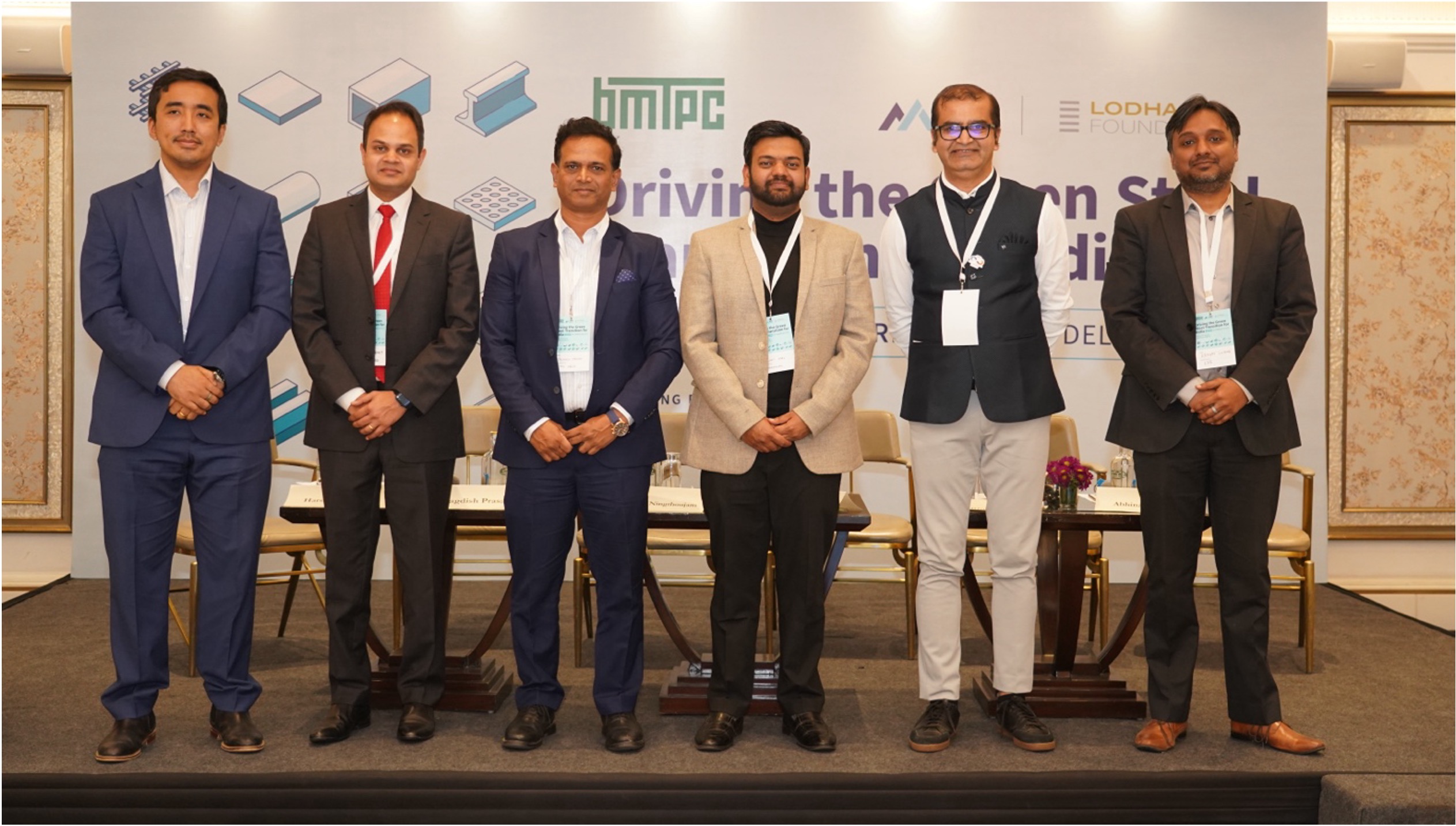
Panel Discussion 1: From Furnace to Frameworks: Operationalising Green Steel Production in India
This panel examined technology readiness, ecosystem constraints, and scale-up pathways for green steel production.
Moderator:
- Harsh Choudhry, Co-founder and CEO, Sentra World
Panellists:
- Jagdish Prasad, Vice President, MTC Group
- Nimit Garg, Director, Vardhman Adarsh Ispat Pvt. Ltd.
- Nitin Kabra, Director, Bhagyalaxmi Rolling Mill Pvt. Ltd.
- Jagabanta Ningthoujam, Principal and Director, RMI – India Program
- Abhinav Sultania, Regional Energy Specialist, Asian Development Bank
Key insights and takeaways:
- Scrap-based decarbonisation and ecosystem readiness: Scrap-based steelmaking was identified as India’s most viable near-term decarbonisation pathway. However, domestic scrap availability is structurally constrained by long product life cycles and historical steel use. Declining scrap quality, driven by multi-material product design and embedded contaminants, further increases cost and operational complexity. As green steel demand grows, competition for scrap is expected to intensify, making it essential to scale scrap-recovery infrastructure.
- Hydrogen and long-term transition pathways: Deep decarbonisation at scale will ultimately depend on hydrogen-based direct reduced iron (DRI) and carbon capture, utilisation, and storage (CCUS). Most existing DRI capacity is coal-based and cannot be directly retrofitted to operate on hydrogen. Gas-based DRI and green iron production for EAF routes may offer intermediate pathways, if supported by offtake assurances and risk-sharing mechanisms. However, the absence of long-term demand certainty remains the principal barrier to capital-intensive transition investments.
- Power costs and renewable access: Electricity costs emerged as a critical determinant of green steel competitiveness, particularly for electric furnace routes. High industrial power tariffs, driven in part by cross-subsidy charges, significantly erode cost competitiveness. In addition, restrictions on open access and gaps in grid integration limit reliable, round-the-clock access to renewable electricity. Addressing these barriers will require long-term power purchase agreements, regulatory clarity, and targeted support for grid integration.
- Supply readiness vs. demand absorption: Despite technical readiness and expanding certification coverage, domestic buyers remain largely disengaged. Delegates noted that India’s recycled steel ecosystem is already capable of manufacturing steel that meets 3–5-star ratings under the Green Steel Taxonomy. In the near term, green steel supply is likely to exceed domestic demand, especially through recycling-based routes powered by renewable electricity. The binding constraint in India’s green steel transition is therefore not production capability, but limited buyer awareness, weak confidence in green attributes, and misaligned procurement incentives.
- Certification, reporting, and data fragmentation: The current landscape is characterised by multiple overlapping certification and reporting frameworks, including taxonomy ratings; product- and process-level certifications; Scope 1 and Scope 2 emissions accounting and voluntary Scope 3 disclosures; and export-facing compliance requirements. Inconsistent definitions — particularly between crude steel and finished steel — complicate emissions accounting and market communication. Therefore, companies struggle to present a single, credible emissions metric to buyers and financiers. Streamlining certifications and declarations will enable improved decision-making for buyers and investors.
- Pricing signals and the missing market pull: Unlike global markets, scrap-based green steel in India is often priced at a discount to primary steel, reflecting the absence of a recognised sustainability value in procurement. Sustainability attributes remain inadequately valued in domestic procurement, particularly among large institutional and infrastructure buyers. After 2026, Carbon Border Adjustment Mechanism (CBAM) impacts are expected to further reshape both domestic and export market dynamics. Given steel’s relatively small share of total construction cost (~10%), panellists noted that moderate green premiums would have a negligible impact on project economics if supported by credible value articulation.
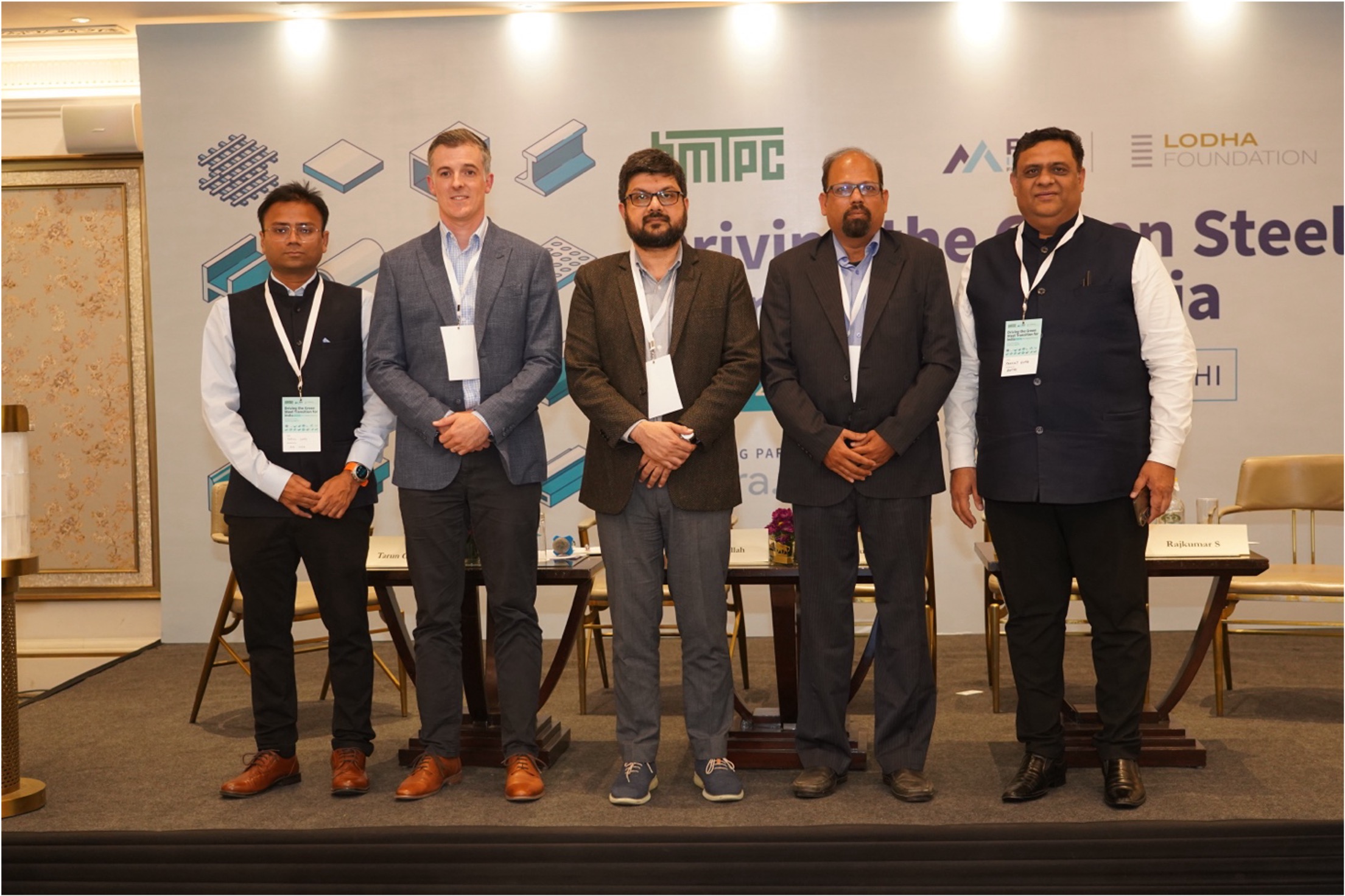
Panel Discussion 2: Leading the mandate: Demand Signals, Procurement Requirements, and Credible Claims
This panel focused on demand-side levers, procurement reform, and the role of public and private buyers in market creation.
Moderator:
- Tarun Garg, Principal, RMI India Foundation
Panellists:
- Aun Abdullah, Program Director, Sustainable Urbanisation, Lodha Foundation
- Tim Bush, Sustainability Principal (Global), Amazon Web Services
- Pankaj Gupta, Deputy Chief – I&D and Chief – Admin (I/C), BMTPC
- Rajkumar S, Head and Senior DGM, Buildings & Factories, Larsen & Toubro
Key insights and takeaways:
- Defining Green Steel, taxonomy ambition and improving market signals: Green steel should not be treated as a static or binary label, but as a trajectory of progressively lower emissions intensity supported by transparent, life-cycle-based accounting. While the current green steel taxonomy was widely recognised as an important starting point, there is clear scope to strengthen its ambition, precision, and differentiation across product types, production routes, and virgin versus recycled content. Buyers underscored the need for performance-based emissions thresholds that tighten over time, accurately reflect real emissions reductions, and provide credible signals to investors and customers. Long-term decarbonisation pathways were consistently linked to the scale-up of low-carbon primary iron, including hydrogen-based DRI and supporting technologies, with scrap-based EAF routes recognised as necessary but insufficient on their own in high-growth markets.
- Green Iron corridors and production-side market creation levers: Deep steel decarbonisation hinges on scaling low-carbon and green iron production rather than relying solely on scrap recycling, which is expected to scale naturally with availability. Green iron corridors integrating renewable energy, hydrogen production, and ironmaking were identified as critical infrastructure enablers. First-of-a-kind offtake commitments for hydrogen-based iron were viewed as essential to de-risk early investments, demonstrate technical feasibility, and catalyse supply-side transformation.
- Material leverage and decarbonisation priorities in buildings: Cement and concrete account for 60%–70% of embodied emissions in buildings, with steel contributing a further 20%–25%, making these materials priority decarbonisation levers. Steel is prioritised in particular due to its material significance, high standardisation, and availability of near-term decarbonisation pathways.
- Embodied carbon boundaries and life-cycle accountability: While industry focus remains centred on operational carbon metrics, embodied carbon at the building level lacks defined boundaries, data, and accountability. Emissions across the building life cycle span upstream materials and downstream energy use. Developers retain limited control over operational emissions post-occupancy, positioning upstream material choices as the most actionable decarbonisation lever.
- Policy vacuum on embodied carbon and weak regulatory signalling: Existing policy and regulatory frameworks emphasise disclosure without enforceable thresholds, and no national, state, or city mandates require embodied carbon measurement or reduction. Even current rating systems primarily capture embodied emissions through reporting, without enforceable thresholds or compliance mandates. This absence of regulatory compulsion weakens demand signals for low-carbon materials, including green steel. Inclusion of green steel in the CPWD Schedule of Rates and state procurement policies was identified as critical for market scaling.
- Data gaps and demand-side value proposition: Weak translation of ESG commitments and Science Based Targets initiative (SBTi) targets into time-bound procurement mandates continues to suppress demand. The limited availability of verified product-level carbon data and uncertainty around scrap availability undermine buyers’ confidence.
- Market fragmentation and platform needs: Asia-Pacific markets remain highly fragmented compared to European markets, necessitating country-specific procurement strategies. Fragmented and sub-scale private demand was identified as inadequate to influence upstream investment decisions or accelerate capacity build-out. Green premiums up to ~5% were broadly viewed as absorbable, with resistance driven more by procedural barriers than economics, requiring clearer articulation of life-cycle value. Buyers stressed that demand aggregation platforms must provide clarity on emissions thresholds, eligible production routes, supplier availability, and long-term supply consistency to reduce perceived risk. Premiums were assessed not through percentage price uplifts, but through marginal abatement cost and alignment with Scope 3 reduction pathways, reinforcing the need for structured, credible demand signals rather than voluntary commitments alone.
- Public procurement and state-led market creation: Delegates acknowledged limited uptake of green steel in public projects to date, due to low awareness, limited technical confidence, and entrenched procurement norms. L1 (lowest cost) procurement frameworks in projects structurally restrict the adoption of low-carbon materials and innovation. Quality-and-Cost-Based Selection mechanisms with embedded sustainability criteria — such as explicit weightage to life-cycle value, energy efficiency, and carbon intensity, alongside technical performance — were identified as critical levers, as contractors primarily respond to mandated requirements. Furthermore, state governments have independent authority to accelerate the adoption of low-carbon materials through procurement mandates and policy instruments, creating demand at scale.
Closing Reflections
- Phased production transition and scale up: Near-term emissions reduction in the steel sector will be driven by scrap-based steelmaking, renewable electricity, and efficiency-led improvements, while deep decarbonisation will depend on green hydrogen-based, low-carbon primary iron, carbon capture solutions, and integrated green iron corridors.
- Capacity expansion timing and carbon lock-in risk: India’s expanding steel capacity will lock in emissions for decades unless near-term investments are aligned with long-term decarbonisation pathways, making early alignment critical to avoid stranded assets and irreversible carbon lock-in.
- Credible definitions and data integrity: Green steel should be a pathway of progressively declining emissions intensity rather than a static label. While the current taxonomy is a constructive starting point, stronger ambition, clearer differentiation, and consistent, life-cycle-based accounting, with tighter performance benchmarks, are needed to address inconsistent emissions boundaries, limited product-level data, and weakened market confidence.
- Built environment as the primary demand lever: Steel demand from the built environment, particularly rebar and structural steel, offers the fastest and most scalable pathway for green steel adoption due to concentrated demand.
- Market design as the binding constraint: The central barrier to green steel adoption in the built environment is not technological readiness but weak market design, reflected in fragmented demand, uncertain supply signals, and procurement systems that fail to value life-cycle performance and emissions outcomes.
- Shared cost and risk allocation: The costs and risks of steel decarbonisation cannot be borne by producers or buyers alone, requiring early volume commitments, aligned financing mechanisms, and coordinated responsibility across the value chain.
- Demand aggregation as the critical enabler: Coordinated demand aggregation through mechanisms such as the India Green Steel Buyers Platform and green public procurement is essential to provide predictability, reduce risk, and unlock investment at scale.
- Procurement reform and public sector leadership: Lowest cost procurement frameworks constrain the adoption of low-carbon materials, making quality and cost-based selection and the integration of green steel into CPWD and state procurement frameworks critical for market creation.
Way Forward
The India Green Steel Buyers Platform will move into its first phase through a structured series of stakeholder workshops to refine programme requirements, governance structure, and the operational design. Interested stakeholders are encouraged to engage with the India Green Steel Buyers Platform as buyers, producers, or partners, and to receive updates as the platform moves from design to implementation, supporting India’s development targets and decarbonisation goals.
Event Gallery